.svg)
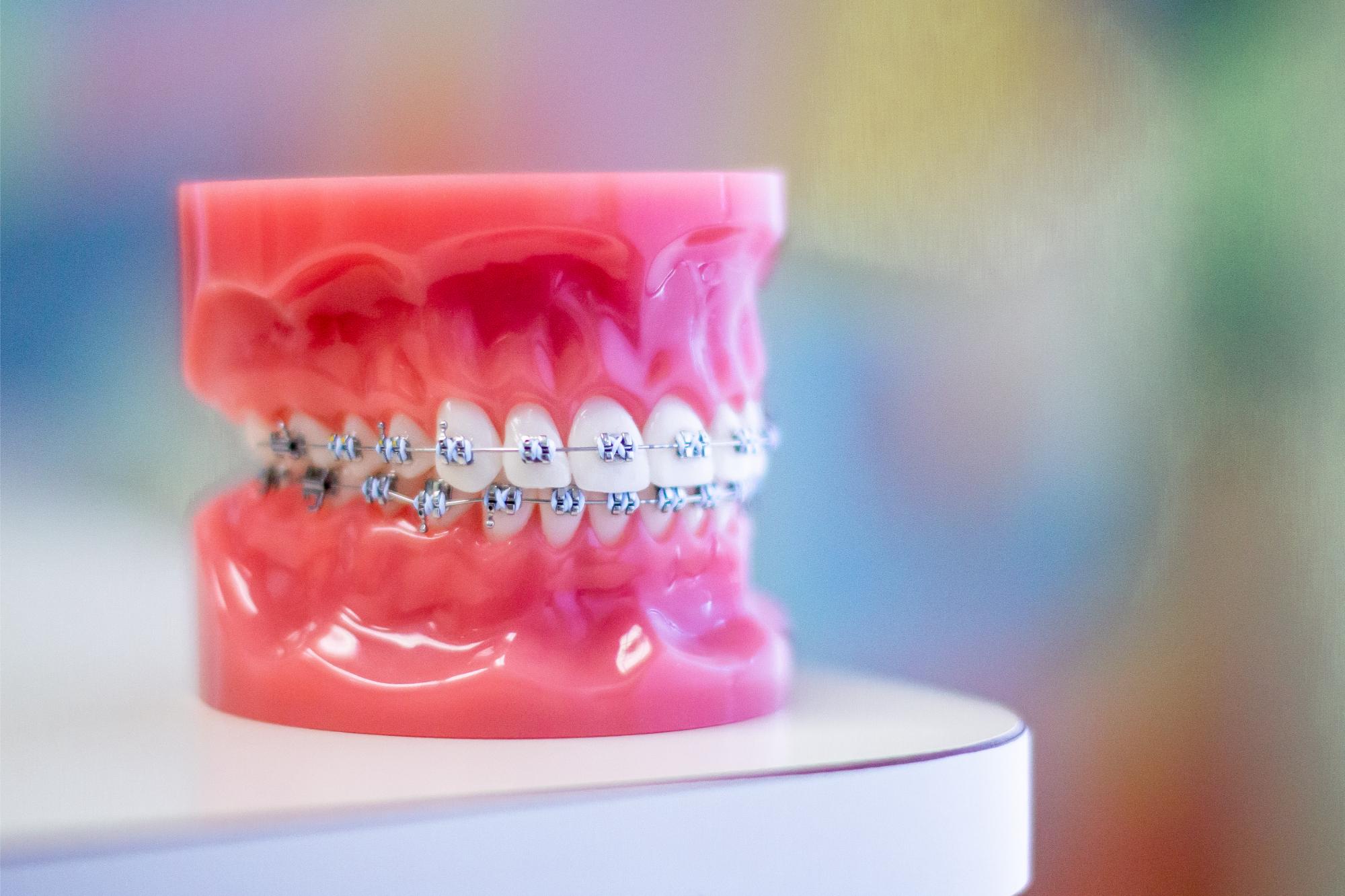
One of the first questions families ask when they walk into our Hamburg and Orchard Park offices is a simple one: should I go with Invisalign or braces? Both straighten teeth well, both are backed by decades of orthodontic science, and both can give you a healthy, confident smile. The right choice usually comes down to your goals, your daily habits, and the kind of correction your bite needs.
Here is how the two options compare, and how we help patients decide.
How each option works
Traditional braces use brackets bonded to each tooth and a thin wire that guides teeth into place over time. They are fixed, so they work around the clock without anything for you to remember. Clear braces follow the same approach with tooth-colored brackets that blend in, which many teens and adults prefer over the classic metal look.
Invisalign takes a different path. Instead of brackets and wires, you wear a series of clear, removable aligners, each one shaped to move your teeth a little closer to their final position. You switch to a new set every week or two and take them out to eat and brush.
Comfort and daily life
Invisalign has no brackets or wires, so there is nothing to irritate your cheeks and no food restrictions, since you remove the trays to eat. That freedom appeals to a lot of adults and busy teens. The trade-off is discipline: aligners only work when they are in your mouth, and most people need to wear them around 20 to 22 hours a day to stay on track.
Braces ask nothing of your memory. They are always working, which makes them a dependable choice for younger patients or anyone who would rather not manage a set of trays. Modern brackets are smaller and more comfortable than the ones you may remember, and a little orthodontic wax handles any early rough spots.

Which one handles your bite
Invisalign has come a long way and now treats many crowding, spacing, and bite issues that once needed braces. That said, certain complex corrections still respond more predictably to metal braces, which give us precise control over each tooth. During your visit we look at your specific alignment and tell you honestly which option will get you the best result, rather than steering you toward one by default.
Dr. Robert Aszkler and Dr. Stephen Aszkler treat patients of every age across Hamburg, Orchard Park, and Derby, and they will walk you through exactly what your smile needs. You can read more about Dr. Rob Aszkler’s approach to care before you come in.
The look
If being discreet matters most to you, Invisalign and clear braces both keep treatment low-key. Invisalign trays are nearly invisible up close, and clear brackets are far more subtle than metal. Plenty of patients decide based on this alone, and that is a perfectly good reason to choose.
How to decide
Ask yourself three questions. Will I consistently wear a set of trays for most of the day? Do I want the freedom to eat anything and remove my appliance? Does my bite need the fine control that braces provide? Your answers usually point clearly in one direction. If they do not, that is exactly what a consultation is for. Curious about the daily experience either way? Our guides on what braces actually feel like and keeping Invisalign clean give you a real sense of both.
The best way to know for sure is to have us take a look. Schedule a free consultation at our Hamburg or Orchard Park office, and we will map out your options together.
Frequently Asked Questions
Is Invisalign as effective as braces?
For many common alignment and bite issues, yes. Invisalign now treats a wide range of cases well. Some complex corrections still respond more predictably to braces, which is why we evaluate your specific bite before recommending either.
Does Invisalign take longer than braces?
Treatment time depends on your case more than the appliance. Comparable cases often finish in a similar window, but wearing your aligners the recommended 20 to 22 hours a day is what keeps Invisalign on schedule.
Can teenagers get Invisalign?
Many teens are good candidates. The main question is whether they will wear the trays consistently. For teens who would rather not manage removable aligners, clear or metal braces are a dependable alternative.
Which option is better for a busy adult?
Adults often lean toward Invisalign for its discreet look and the freedom to remove it for meetings and meals. If you would rather not think about your treatment day to day, braces quietly do the work for you.